


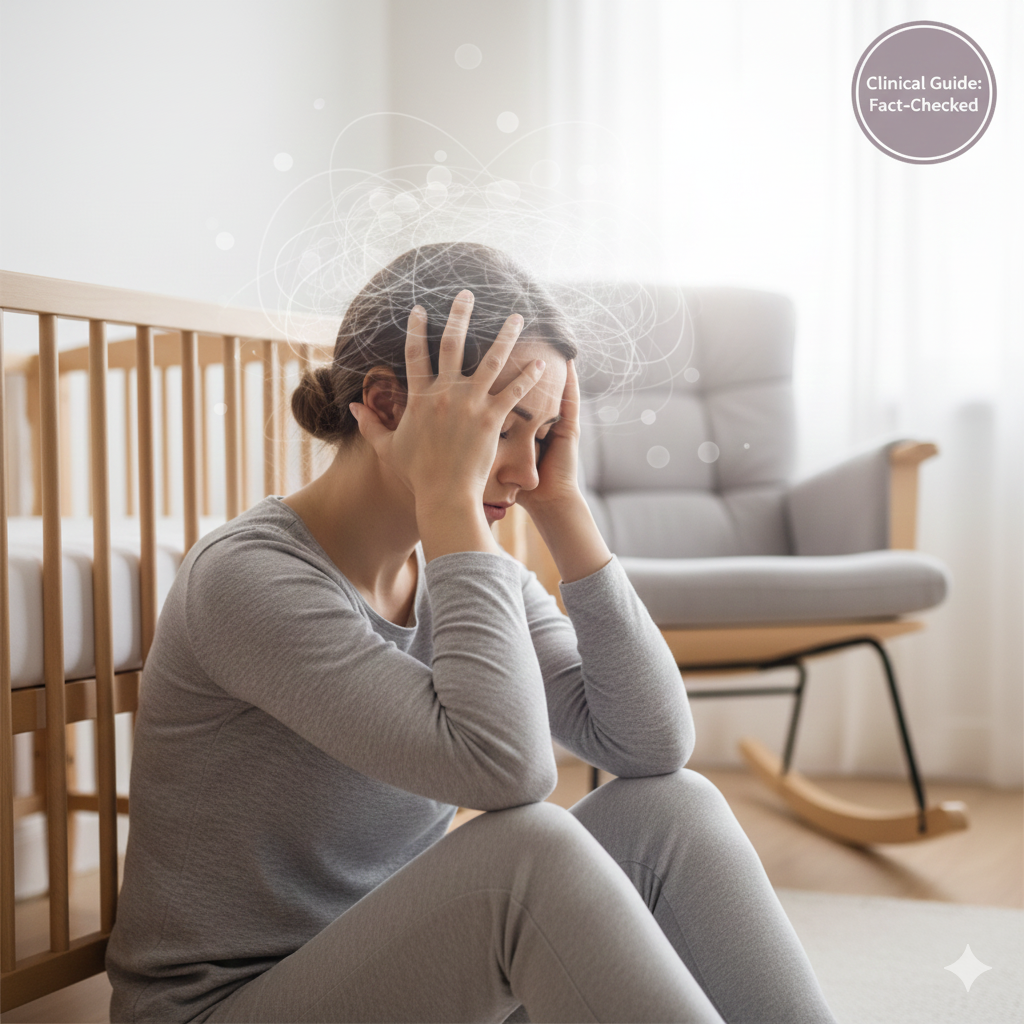

Postpartum depression (PPD) is almost always discussed as a mother’s struggle. But the data tells a different story. Research shows that approximately 1 in 10 fathers or non-birthing partners experience Paternal Postpartum Depression (PPPD).
If you are a new father feeling a strange sense of resentment, constant anger, or a desire to “escape” your house, you aren’t a “bad dad.” You are likely experiencing a significant biological and psychological shift that requires professional support.
Want to learn more about Post Partum Depression? check out our clinical resource
The Biology of the “New Dad” Brain
It is a common myth that only the person who gives birth undergoes hormonal changes. When a man becomes a father and engages in caregiving, his brain chemistry shifts to facilitate bonding.
- The Testosterone Drop: Studies have found that testosterone levels in new fathers can drop by as much as 34%. While this makes men more nurturing, a sharp drop is clinically linked to increased depressive symptoms.
- The Neurochemical Exchange: Involved fathers see a spike in Oxytocin (the bonding hormone) and Prolactin. If these shifts are coupled with extreme sleep deprivation, the result is often mood instability.
Why PPPD Looks Different: The “Male” Symptoms
Men and non-birthing partners often experience “masked depression.” Instead of the sadness or crying typically associated with PPD, paternal depression often looks like “agitated withdrawal.”
Common Red Flags for Dads:
- Increased Irritability (“Dad Rage”): Snapping at your partner over small things or feeling a constant, low-level simmer of anger.
- Escapism: Staying late at work unnecessarily, spending hours scrolling on your phone, or using alcohol/substances to “numb” the stress.
- Physical Pains: Chronic headaches, digestive issues, or back pain that has no clear physical cause.
- Loss of Interest: Feeling no joy in hobbies or a lack of connection/bonding with the newborn.
The “Contagion Effect”: Why Your Health Matters
In maternal mental health, we talk about the “Contagion Effect.” Statistics show that if one partner has postpartum depression, the other partner’s risk of developing it jumps to nearly 50%. Depression in a household does not exist in a vacuum; it affects the bonding of the entire family.
Self-Check for Dads: 5 Questions to Ask
If you answer “yes” to 3 or more of these, it’s time to speak with a provider or a therapist.
- Do I feel like I am constantly on the verge of “snapping” or losing my temper?
- Am I finding reasons to stay away from home or avoid holding the baby?
- Have I lost interest in things I used to love (sports, gaming, exercise)?
- Do I feel like I’m failing as a provider or a partner, despite doing the work?
- Is my sleep deprivation leading to feelings of hopelessness rather than just tiredness?
How to Get Help
The good news is that PPPD responds very well to the same treatments as maternal PPD: Cognitive Behavioral Therapy (CBT) and, when necessary, medication. Simply acknowledging that this is a “real” medical condition often provides the immediate relief needed to start the healing process.
Clinical Insight
“In my work with new parents, I tell dads: You are the ‘co-pilot’ of this family. If the co-pilot is struggling, the whole plane is at risk. Seeking help for your depression isn’t ‘taking away’ from your partner’s needs. It is the most protective thing you can do for her and the baby.”
External Medical Sources
- Postpartum Support International (PSI): Help for Dads.
- Cleveland Clinic: Postpartum Depression in Men.
- Journal of the American Medical Association (JAMA): Paternal Postnatal Depression Meta-analysis.