



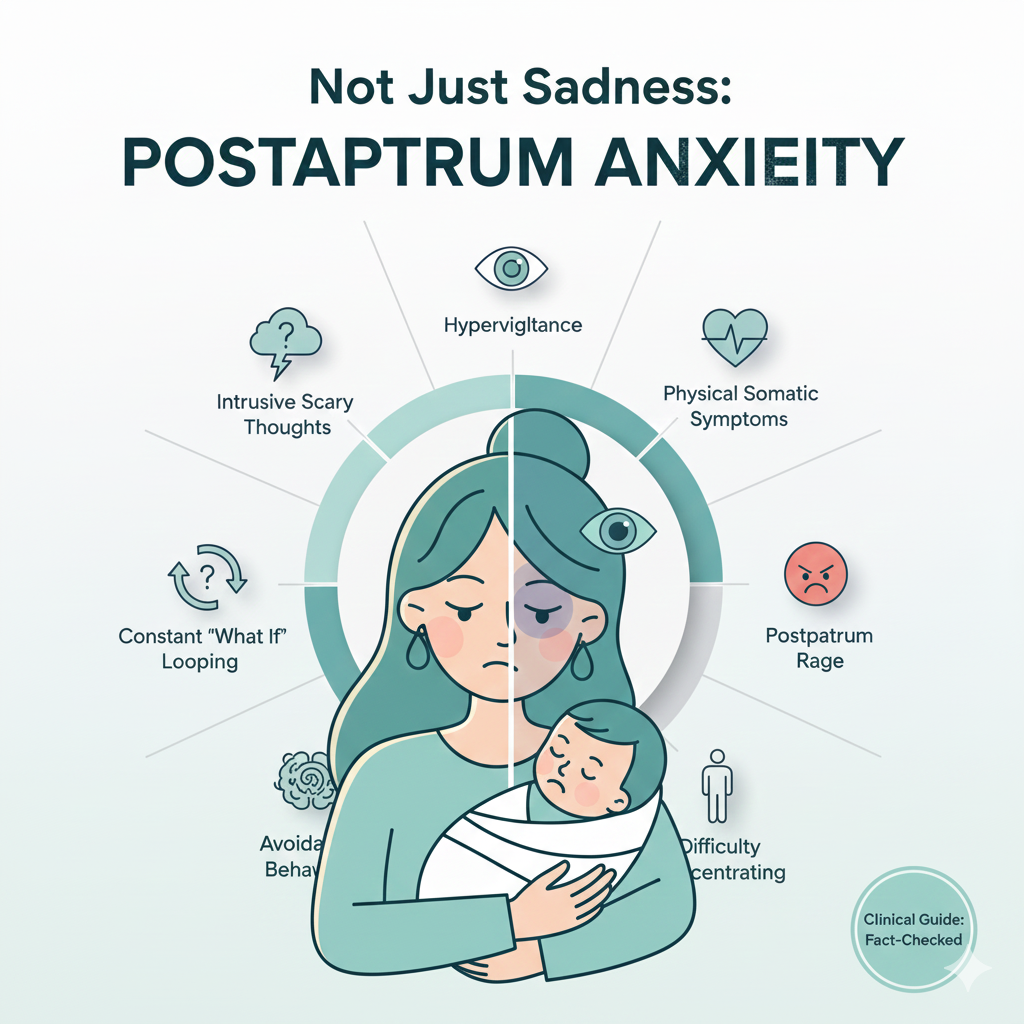
Many new parents expect to feel “the blues” or deep sadness, but for many, the postpartum experience is defined by a different, invisible force: anxiety. Postpartum Anxiety (PPA) is a clinical condition characterized by excessive worrying, racing thoughts, and physical tension that interfere with daily life, often manifesting as a sense of constant dread rather than deep sadness. While Postpartum Depression (PPD) is widely discussed, PPA affects approximately 10–15% of new parents and often goes undiagnosed because its “hidden” signs are frequently mistaken for “normal” new-parent stress.
Why Postpartum Anxiety is Often Overlooked
Unlike depression, which is often characterized by low energy and withdrawal, PPA can look like “high performance.” A mother with PPA may appear to be “doing it all,” but internally, she is navigating a storm of cortisol and adrenaline triggered by an overactive amygdala. Understanding that PPA is a biological response to a perceived threat is the first step in reclaiming your peace.
10 Hidden Signs of Postpartum Anxiety
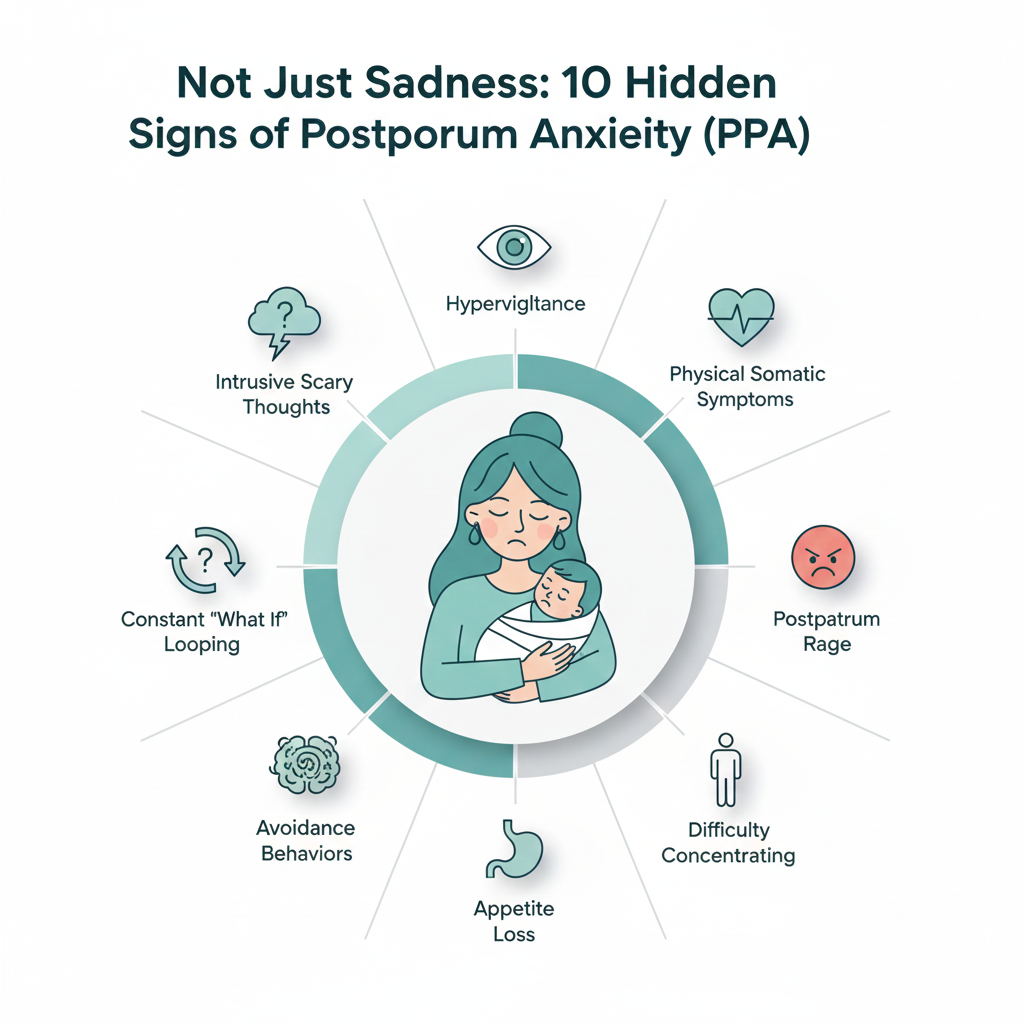
1. Intrusive “Scary” Thoughts
These are repetitive, unwanted images of harm coming to the baby. While distressing, they are a symptom of anxiety, not an indication of intent.
2. Hypervigilance
An inability to sleep even when the baby is sleeping. You may find yourself staring at the monitor or “listening” for breathing patterns with an intensity that prevents rest.
3. Physical Somatic Symptoms
Anxiety isn’t just in the head. It manifests as heart palpitations, chest tightness, nausea, or “butterflies” that won’t go away.
4. Postpartum Rage
Sudden, intense flashes of anger or irritability. If you find yourself “snapping” over small triggers, it may be your nervous system stuck in a “fight” response.
5. Constant “What If” Looping
Rehearsing worst-case scenarios in your mind (e.g., “What if I trip on the stairs? What if someone breaks in?”).
6. Compulsive Checking
Repeatedly checking that the stove is off, the doors are locked, or the baby is breathing to a degree that feels outside of your control.
7. Avoidance Behaviors
Avoiding certain people, places, or news stories because they “trigger” your anxiety. In some cases, this leads to social isolation.
8. Appetite Loss and “Knotted” Stomach
A physical inability to eat, not due to lack of time, but because of a constant feeling of being “on edge.”
9. Difficulty Concentrating (“Racing Brain”)
Often described as “brain fog,” but it feels more like having 100 tabs open in your brain and being unable to close any of them.
10. Dread of Being Alone
A deep, paralyzing fear of being the sole caregiver for any period, often driven by a lack of confidence in your ability to keep the baby safe.
The Biological Connection: Cortisol and Your Brain
During the postpartum period, your brain undergoes significant structural changes. The amygdala, your brain’s alarm system, becomes more sensitive to protect the infant. In PPA, this alarm system gets stuck in the “ON” position.
How to Find Relief: Grounding Techniques
If you are experiencing a “spike” in anxiety, try the 3-2-1 Grounding Method:
- Acknowledge 3 things you can see.
- Acknowledge 2 things you can touch.
- Acknowledge 1 thing you can hear.
Clinical Insight
In my clinical practice, I often see parents who feel guilty for their “scary thoughts.” I remind them that these thoughts are actually a sign of an overprotective brain, not a “bad” parent. Once we treat the underlying anxiety through Cognitive Behavioral Therapy (CBT), these thoughts lose their power and eventually fade.
External Medical Sources
- Anxiety and Depression Association of America (ADAA): Postpartum Anxiety Facts.
- Cleveland Clinic: Postpartum Anxiety Symptoms & Treatment.
- Postpartum Support International (PSI): PPA Support Resources.