

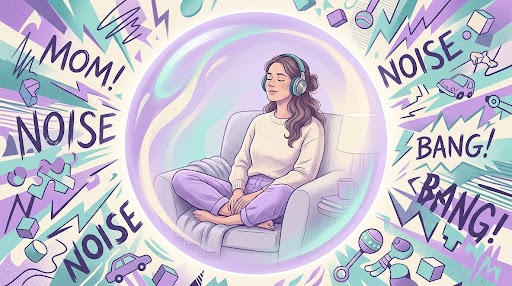

ADHD self-care for moms is the proactive management of the nervous system and executive function, rather than temporary relaxation. For a neurodivergent brain, standard “pampering” can often lead to under-stimulation or guilt, which exacerbates burnout. Effective ADHD self-care focuses on sensory regulation, dopamine replenishment, and reducing the cognitive load of motherhood to create a sustainable lifestyle.
Why Traditional Self-Care Feels Like a Chore
If you have ADHD, being told to “just sit quietly and meditate” can feel like a punishment. Traditional self-care often requires high levels of executive function, planning a spa day, booking a class, or maintaining a rigid routine, the very resources you are already depleted of.
In my years of clinical practice in Ontario, I see a recurring pattern: ADHD moms feel like they are failing at self-care because they can’t stick to “calming” habits. The truth is, your brain requires stimulation to find calm.
1. Build Your “Dopamine Menu” (Dopamenu)
The ADHD brain is biologically wired for lower baseline dopamine. When you are “running on empty,” your brain will naturally seek dopamine through “junk” sources like doom-scrolling. A Dopamine Menu provides a pre-planned list of healthy “hits” so you don’t have to think when you’re exhausted.
- Appetizers (5 mins): Step into the sun, a 1-minute dance party, or a cold water splash.
- Mains (30+ mins): Gardening, a creative hobby (Lego, painting), or body-doubling with a friend.
- Sides (Passive): Listening to a “Dopamine Dump” playlist while doing laundry or cooking.
- Desserts (Use Sparingly): Social media or reality TV.
2. The Sensory Audit: Protecting Your Nervous System
Motherhood is a sensory minefield. The constant “Mom, Mom, Mom!”, sticky fingers, and background noise can lead to Sensory Overload. Real self-care means auditing your environment before you hit a “meltdown” point.
- Sound Regulation: Use high-quality earplugs or noise-canceling headphones to dampen the “sharpness” of household noise while still being able to hear your children.
- The “Touched Out” Boundary: Acknowledge when your tactile system is overwhelmed. Communicating your need for physical space is a vital clinical intervention.
- Visual Noise: Reduce visual clutter in high-traffic areas. For an ADHD brain, clutter is an unwritten, overwhelming “to-do list.”
3. Outsourcing Executive Function
The “Mental Load” of motherhood is largely a series of executive function tasks: planning, remembering, and initiating. For an ADHD mom, this is the most draining part of the day.
- Body Doubling: If you can’t start the dishes, FaceTime a friend who also needs to clean. The presence of another person, even virtually, helps the ADHD brain “activate” and overcome task paralysis.
- The “Good Enough” Rule: In our practice, we teach that if a task is worth doing, it’s worth doing poorly. Brushing your teeth for 20 seconds is better than 0. Lowering the barrier to entry preserves your limited energy.
4. Addressing Rejection Sensitive Dysphoria (RSD)
Many ADHD moms experience RSD, where a child’s natural rebellion or a partner’s feedback feels like an unbearable personal failure. Real self-care involves recognizing this physiological response and using Cognitive Reframing to separate your worth from your child’s behavior.
Key Takeaways for Neurodivergent Moms
Strategy | Implementation |
Dopamine Menu | Keep a list on your fridge of things that “spark” energy. |
Sensory Audit | Use tools like Loop earplugs to lower household volume. |
Body Doubling | Don’t do chores alone; use a friend or a podcast for “company.” |
Clinical Support | Work with an ADHD-informed therapist to manage RSD and burnout. |
When to Seek Specialized Support in Ontario
Sometimes, a Dopamine Menu isn’t enough. If you are experiencing chronic “paralysis,” intense parental rage, or feelings of worthlessness, you may need neuro-affirming therapy. At Inner Journey with Maria, we specialize in helping moms navigate the intersection of ADHD and motherhood through trauma-informed, clinical support.
References
- CADDRA (Canadian ADHD Resource Alliance). (2024). Canadian ADHD Practice Guidelines. https://www.caddra.ca
- Barkley, R. A. (2020). Executive Functions: What They Are, How They Work, and Why They Evolved. Guilford Press.
- Hallowell, E. M., & Ratey, J. J. (2021). ADHD 2.0: New Science and Essential Strategies for Thriving with Distraction. Ballantine Books.
- American Psychological Association. (2022). Understanding Parental Burnout and Strategies for Recovery.