

If the Sunday scaries have turned into a Monday-through-Friday sense of dread, you may be considering a leave of absence. In Ontario, while “Stress Leave” isn’t a specific term found in the law, mental health is legally protected under two major pieces of legislation.
The Legal Framework: ESA vs. The Human Rights Code
Your protection depends on how much time you need and the severity of your symptoms.
The Employment Standards Act (ESA) – Short-Term Relief
Under the ESA, most employees in Ontario have a baseline of job-protected sick leave.
- The Minimum: 3 unpaid days per calendar year.
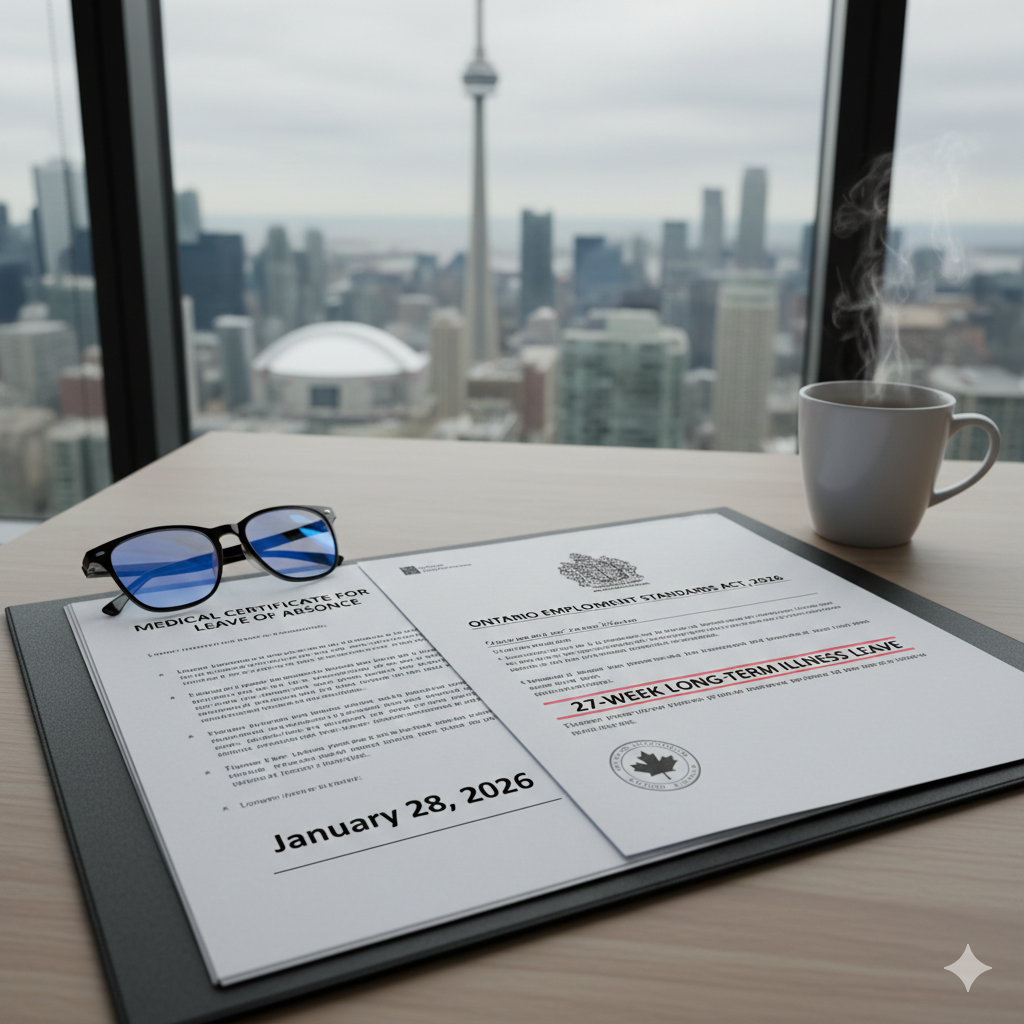
- New for 2026: For more significant health challenges, the Long-Term Illness Leave (effective late 2025) now allows eligible employees to take up to 27 weeks of unpaid, job-protected leave if a qualified health practitioner provides a certificate stating you have a “serious medical condition.”
The Ontario Human Rights Code – Long-Term Protection
If your stress, anxiety, or burnout is diagnosed as a disability, you are protected from discrimination.
- The Duty to Accommodate: Your employer must adjust your work environment or duties (e.g., reduced hours, modified tasks, or extended leave) to the point of “undue hardship.”
How to Request a Stress Leave
Don’t just stop showing up; follow these steps to ensure your job remains protected.
Step 1: Consult Your Doctor
You will need a medical note. Crucially, you do not have to disclose your specific diagnosis (e.g., “Generalized Anxiety Disorder”) to your employer.
- What the note should say: That you are under medical care and are unable to perform your duties for a specific period of time.
Step 2: Provide Written Notice
Notify your employer as soon as possible. A written email creates a “paper trail” that is vital if there are ever disputes about your leave.
Step 3: Explore Financial Support
Since ESA leaves are typically unpaid, look into these options:
- Short-Term Disability (STD): Check your workplace benefits package.
- EI Sickness Benefits: You may be eligible for up to 15 weeks of financial assistance through the federal government if you have enough insurable hours.
Workplace Accommodations: The “Return to Work”
You have a right to return to your same (or a comparable) position. If you aren’t ready for a full 40-hour week, your employer has a Duty to Accommodate your return. This might include:
- Gradual return-to-work schedules.
- Changes in reporting structures or supervisors.
- Frequent breaks or a quiet workspace.
Common Myths About Stress Leave in Ontario
Myth: “My boss can fire me if I take stress leave.” Fact: If your leave is protected under the ESA or the Human Rights Code, it is illegal for your employer to terminate or penalize you for taking that time.
Myth: “I have to be suffering from work-related stress to take leave.” Fact: You are entitled to sick leave regardless of whether the stress comes from your job, your personal life, or a biological condition.
Clinical Insight
“Many clients wait until they are in a total ‘burnout collapse’ before asking for help because they fear being seen as weak. In 2026, Ontario law is clearer than ever: mental health is health. Taking a 27-week illness leave for a mental health crisis is no different than taking it for a physical surgery.”
External Legal & Medical Resources
- Ontario.ca: Guide to the Employment Standards Act.
- Ontario Human Rights Commission: Policy on Mental Health Disabilities.
- Service Canada: EI Sickness Benefits Information.