


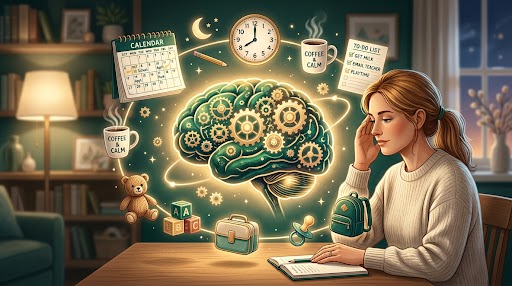
In Ontario, we often joke about The Grey, that stretch of time between November and April where the sun feels like a distant memory. For thousands of Ontarians, though, this is not just a weather pattern. It is a clinical shift in mental health.
While Seasonal Affective Disorder (SAD) is typically associated with low energy and sadness, it frequently presents as heightened anxiety, restlessness, and brain fog. Understanding the difference matters because managing winter sadness and managing winter anxiety are not the same, and treating them the same way can leave you stuck.
Why Do Ontario Winters Trigger Anxiety?
Ontario winters trigger anxiety primarily through three biological mechanisms: circadian rhythm disruption, reduced serotonin production, and elevated melatonin levels. Each of these affects mood and nervous system regulation in measurable ways, and together they can create a significant seasonal shift in how anxious or flat you feel.
Living in northern latitudes like Ontario, especially in the GTA, Ottawa, or further north, means significant disruptions to your biological clock.
- Circadian Rhythm Disruption: The lack of morning sunlight confuses your internal clock, making it harder to wake up and harder to wind down. This creates the tired-but-wired state that many clients describe as their signature winter experience.
- Reduced Serotonin: Sunlight exposure plays a role in serotonin regulation, our primary mood-stabilising neurotransmitter. When light decreases, anxiety levels can rise, not as a character flaw, but as a physiological response to environmental change.
- Melatonin Overload: In response to darkness, the body produces more melatonin. This can lead to the sluggishness and irritability that is often mistaken for laziness, when in fact it is a hormonal response to seasonal change.
Understanding these mechanisms is the first step. The next is distinguishing between the two conditions most commonly confused during Ontario winters.
SAD vs. Winter Anxiety: Understanding the Difference
SAD and winter anxiety are related but distinct, and misidentifying one as the other leads to ineffective coping. SAD is primarily characterised by low energy, hypersomnia, social withdrawal, and low mood that follows a seasonal pattern, appearing in late autumn and lifting in spring. It is a recognised depressive disorder with a documented biological mechanism.
Winter anxiety looks different. It shows up as hypervigilance, racing thoughts, physical tension, and a sense of dread that arrives with the early darkness. Many people with winter anxiety are not sad; they are wired, on edge, and exhausted from being on edge.
Some people experience both simultaneously, which is worth naming directly. The sluggishness of SAD combined with the activation of anxiety creates a particularly disorienting internal state. Both respond to therapy. If this resonates, you can learn more about how I approach anxiety therapy in Newmarket.
Signs You May Be Experiencing Winter Anxiety
Winter anxiety in Ontario often presents in ways that are easy to dismiss as seasonal moodiness. These are the patterns worth taking seriously.
- Restlessness: A persistent sense of cabin fever or an inability to relax, even when you have time and space to do so.
- Social Avoidance: Anxious thoughts about social obligations during the holidays or cold weather that tip from preference for quiet into active avoidance.
- Increased Dread at Dusk: A feeling of heaviness or doom that begins as soon as the sun starts to set at 4:30 PM. This is a signal that your nervous system has learned to associate darkness with threat.
- Physical Anxiety Symptoms After Eating: Blood sugar spikes from winter comfort foods can mimic the physical symptoms of a panic attack, creating a confusing loop of physical anxiety with no clear cause.
If several of these are familiar, the Ontario Survival Toolkit below is a practical starting point.
The Ontario Survival Toolkit
Managing winter anxiety in a climate like ours requires a deliberate, layered approach. No single strategy is sufficient on its own. These are the evidence-informed tools I discuss most often with clients navigating this season.
Light Therapy: The 10,000 Lux Rule
A SAD lamp is a clinical tool. Using a 10,000 lux light box for 20 to 30 minutes every morning can help reset your circadian rhythm and support serotonin regulation.
- Start using it in October, before the clocks change, to stay ahead of the seasonal shift rather than trying to recover after it has already taken hold.
The Vitamin D Factor
Because of our latitude, Ontarians generally cannot synthesise sufficient Vitamin D from sunlight between October and April. Research suggests that low Vitamin D levels are associated with both depressive and anxious symptoms in some individuals. Consult with your physician or naturopath about a supplement dose appropriate for your situation.
Behavioural Activation: The Out-Winter Strategy
Anxiety intensifies in isolation. Even when the wind chill is -20 degrees Celsius, getting outside for 15 minutes during peak daylight hours (noon to 1:00 PM) can interrupt the avoidance cycle that winter anxiety feeds on and support cortisol regulation.
Managing the News and Social Media Cycle
Winter months in Ontario often coincide with increased news consumption and social media use, both of which can amplify ambient anxiety. Building deliberate offline time into your evening routine is a clinical strategy for people with seasonal anxiety.
Sleep Hygiene in the Dark Months
Extended darkness disrupts sleep architecture in ways that worsen anxiety the following day. Keeping a consistent wake time, even on weekends, is one of the most evidence-supported interventions for seasonal mood disruption. It signals to your circadian system that you are in control of the rhythm, not the weather.
When to Seek Therapy for Winter Anxiety
Winter anxiety becomes a clinical concern when it is consistently interfering with your ability to function at work, maintain relationships, or enjoy things that usually matter to you. It also warrants professional support if you find yourself using substances to get through the long nights, or if the distress feels disproportionate to the season.
Techniques like Cognitive Behavioural Therapy (CBT) are well-supported for challenging the all-or-nothing thinking that often accompanies seasonal shifts, for example the belief that “I will not feel better until May.” Somatic nervous system approaches can help regulate the physical activation that winter anxiety produces.
You can learn more about how I work through stress management therapy in Newmarket, or book a free 15-minute call to talk through what you are experiencing.
If you are in crisis or need immediate support, please contact Crisis Services Canada: 1-833-456-4566 (available 24/7, toll-free across Canada).
A Note From Maria
“In Ontario, we see a significant spike in therapy inquiries right after the clocks fall back in November. I always tell my clients: you are not losing your progress. Your biology is responding to an environment of scarcity. We do not need to fix the winter. We can strengthen your tools for navigating it.”
Frequently Asked Questions About SAD and Winter Anxiety in Ontario
Is SAD the same as winter depression?
SAD (Seasonal Affective Disorder) is a subtype of depression with a seasonal pattern, typically appearing in late autumn and lifting in spring. It is characterised primarily by low mood, fatigue, and withdrawal. Winter depression is a colloquial term that often refers to the same experience. If symptoms are recurring and significantly affecting your functioning, a clinical assessment is worthwhile.
Can light therapy help with anxiety, not just depression?
Research suggests that light therapy can support circadian rhythm regulation, which in turn can have a stabilising effect on both mood and anxiety for some people. It is not a standalone treatment for clinical anxiety disorders, but it is a useful tool alongside therapy and other lifestyle strategies, particularly in high-latitude provinces like Ontario.
How do I know if I need therapy for seasonal anxiety or just lifestyle changes?
Lifestyle strategies such as light therapy, exercise, and sleep hygiene are appropriate starting points for mild seasonal shifts. If your symptoms are recurring year after year, significantly affecting your relationships or work, or if you have tried self-directed strategies without improvement, speaking with a regulated psychotherapist is the appropriate next step.
Sources
This article is for informational purposes only and does not constitute medical or psychological advice. It is not a substitute for professional assessment, diagnosis, or treatment. Maria Korchagina is a Registered Psychotherapist (Qualifying), CRPO Registration 17092, practicing virtually across Ontario.