


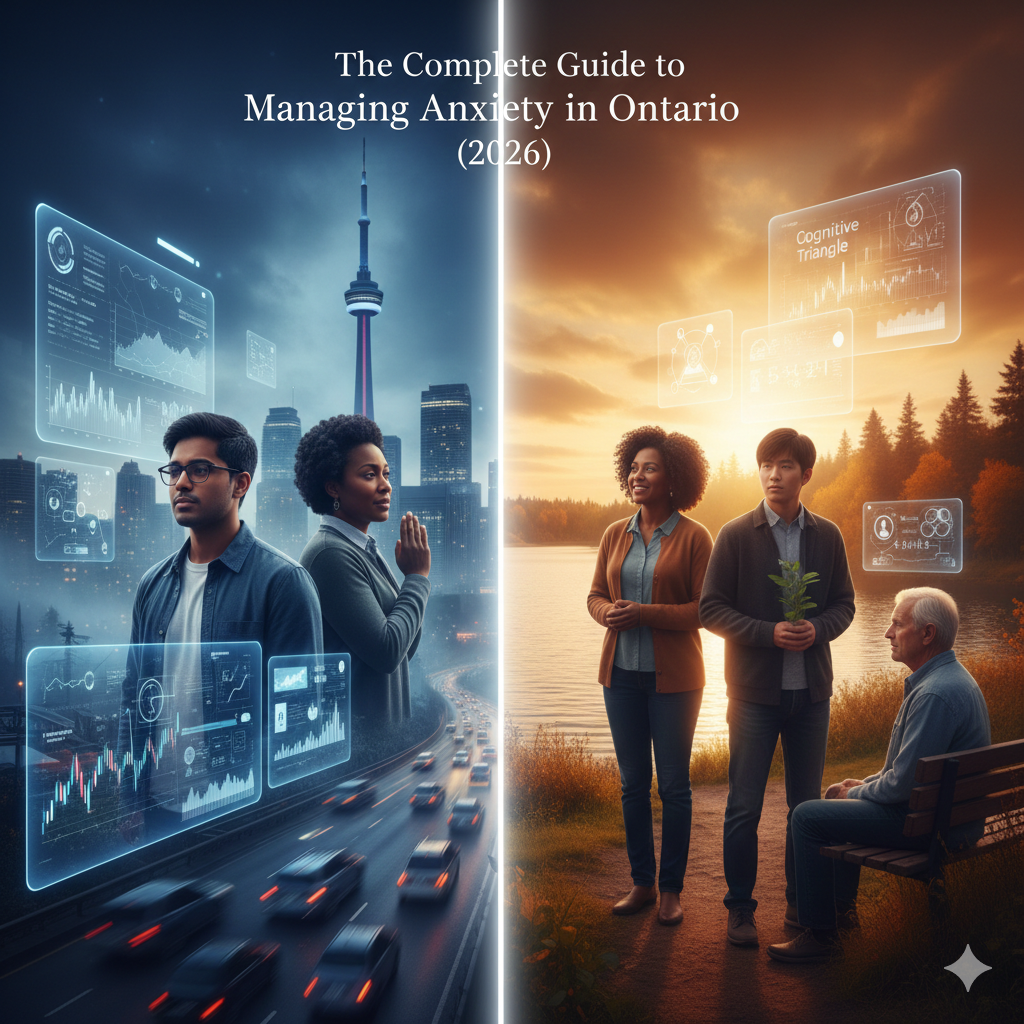
Living in Ontario in 2026 brings unique stressors from the high-speed tech culture of the Waterloo Corridor to the bustling commutes of the GTA. Whether you are dealing with a sudden panic attack or the quiet, persistent hum of high-functioning anxiety, you are not alone.
This guide is designed to help you understand the types of anxiety, immediate coping strategies, and how to navigate the Ontario mental health system to find the professional support you deserve.
Identifying Your Anxiety
Anxiety isn’t a one-size-fits-all experience. Understanding how your anxiety manifests is the first step toward effective management.
- High-Functioning Anxiety: You look successful on the outside but feel constant dread on the inside. Read more in our High-Functioning Anxiety Guide.
- Panic vs. Anxiety Attacks: Do you feel a “sudden storm” or a “slow burn”? Learn the vital differences in our Panic vs. Anxiety Attack Comparison.
- Social & Workplace Anxiety: Navigating the new hybrid office culture in the GTA can be a major trigger. Explore strategies in Social Anxiety & Office Culture.
Immediate Coping & Grounding
When anxiety peaks, you need tools that work in the moment. Ontario’s own natural landscapes and local communities offer powerful anchors for your mental health.
- Nature-Based Healing: Use the 5-4-3-2-1 technique while exploring the Greenbelt or the Bruce Trail. See our Nature & Mindfulness Guide.
- Local Grounding: If you find yourself in a crisis while out in public, follow our Newmarket Local’s Guide to Grounding for specific, site-based techniques.
Professional Treatment: The Ontario Landscape
Ontario has one of the most robust structured mental health programs in Canada. You have choices between free public programs and specialized private care.
The Gold Standard: CBT
Cognitive Behavioural Therapy (CBT) is the primary treatment used in Ontario to “rewire” anxious thought patterns. Learn how it works in our CBT for Anxiety Guide.
Accessing the OSP Program
The Ontario Structured Psychotherapy (OSP) program provides free, evidence-based CBT for adults. You can self-refer or speak to your doctor to get started with:
- BounceBack Ontario: Telephone coaching and workbooks for those 15+.
- Guided iCBT: Online modules with therapist support.
- Individual/Group Therapy: Intensive sessions for more complex needs.
Digital Burnout & The Modern Worker
In 2026, the “Right to Disconnect” is more than a policy it’s a mental health necessity. If your work in the tech sector is fueling your stress, read Digital Burnout in the GTA & Waterloo to learn how to reclaim your analog peace.
External & Medical Resources: Where to Turn
If you are in distress now, please reach out to these 24/7 Ontario services:
- ConnexOntario: 1-866-531-2600 (General mental health info)
- Talk Suicide Canada: 1-833-456-4566
- Ontario Crisis Text Line: Text HOME to 686868
- Health811: Call 811 for non-emergency medical advice from a registered nurse.
- CAMH (Toronto): Visit the CAMH Anxiety Information Guide.
Clinical Insight
“Navigating the mental health system in Ontario can feel overwhelming when you are already anxious. Start small. You don’t need a formal diagnosis to use a grounding technique or to call a support line. The system is built to be a ‘stepped-care’ model, start with the resource that feels most manageable today.”